Web Design Clients: Consistent Client Acquisition
Discover why web design efforts fail to bring consistent clients. Learn proven strategies from paid advertising to personal branding that actually work.

Saif Alam
Last updated: 6 May 2026
8 min read
TLDRQuick Summary
- •Client acquisition requires strategic focus rather than scattered efforts across multiple channels
- •Paid advertising, referrals, and personal branding are the most effective strategies for consistent clients
- •Cold email and generic outreach often waste time and yield poor results for web designers
- •Focus on mastering 1-2 proven strategies rather than trying every tactic simultaneously
- •Building authority and systems leads to sustainable client acquisition over time
Every web designer faces the same frustrating situation at some point. You're working hard, outreaching to potential clients, and staying busy most days. Your website looks good. Your portfolio shows real results. Yet somehow, clients still aren't coming in consistently. Your bank account doesn't reflect the effort you're putting in.
The Reality Behind the Methods
The harsh truth is that effort alone doesn't guarantee client acquisition. The real problem isn't how much you're working—it's where you're focusing that work.
There are dozens of ways to land web design clients. The internet is full of strategies, tactics, and "proven methods." But when everything feels like a viable option, nothing actually gets your full attention. You end up spreading yourself thin across too many channels instead of doubling down on what genuinely works.
This is why many web designers plateau. They try a little cold email, a little social media outreach, maybe some paid ads if they're feeling ambitious, and then wonder why results feel unpredictable. What they really need is clarity. They need to know which strategies actually print money and which ones are wasting their time.
Client Acquisition Realities
After running a web design agency for years and signing clients consistently every month, the picture becomes clear. Some strategies work exceptionally well. Others are mediocre but functional. And some are genuinely not worth your time at all.
The difference between agencies that thrive and those that barely survive often comes down to this: they picked the right client acquisition channels and stopped chasing shiny objects. They committed to what works and built their business around it.
So what actually works? Let's separate the money-makers from the time-wasters.
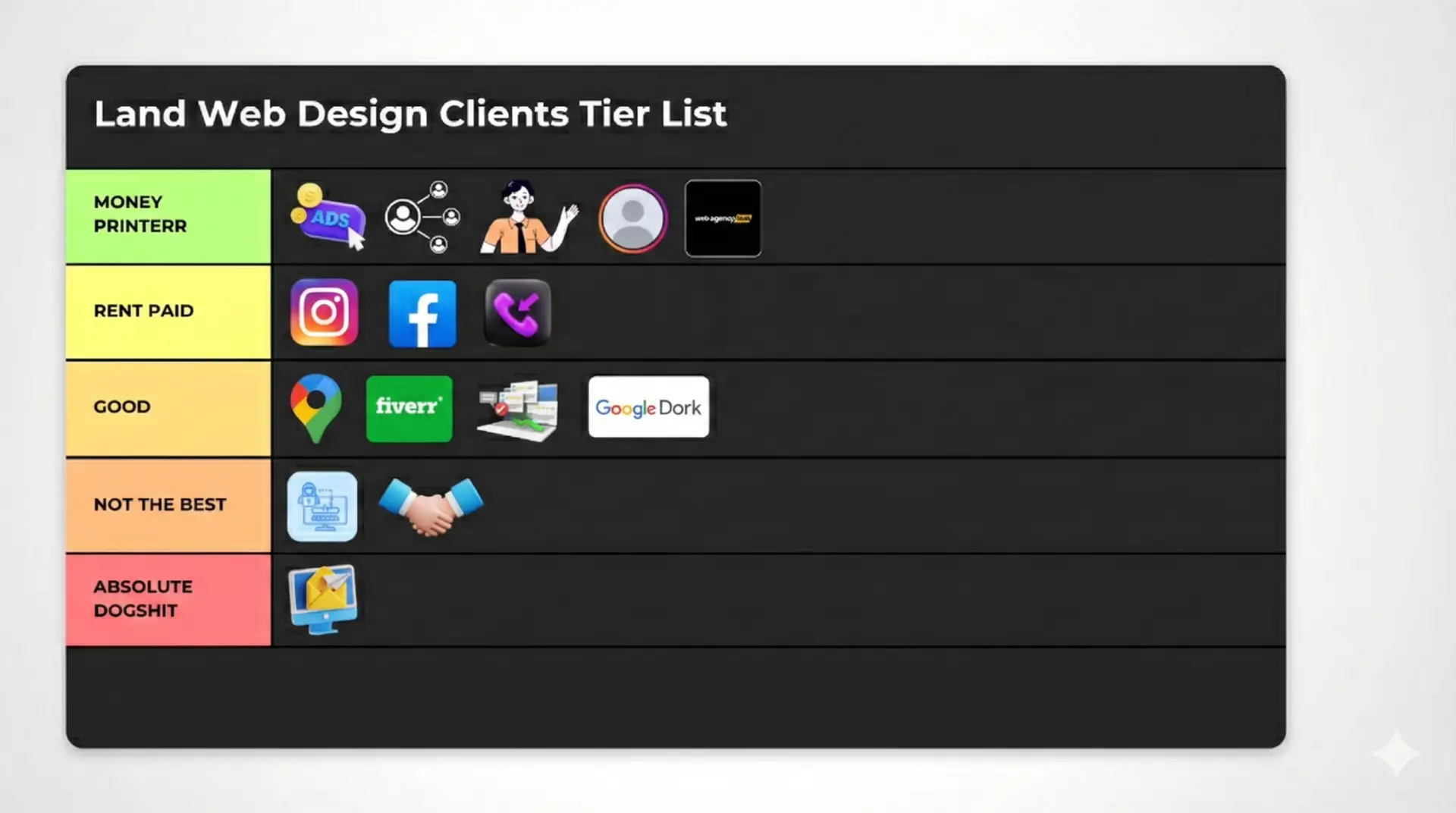
Tier One: The Real Money Makers
If you want to understand which strategies truly scale your agency, think about them in tiers. At the top are the methods that consistently bring in clients and eventually run on autopilot.
Scaling Through Paid Advertising
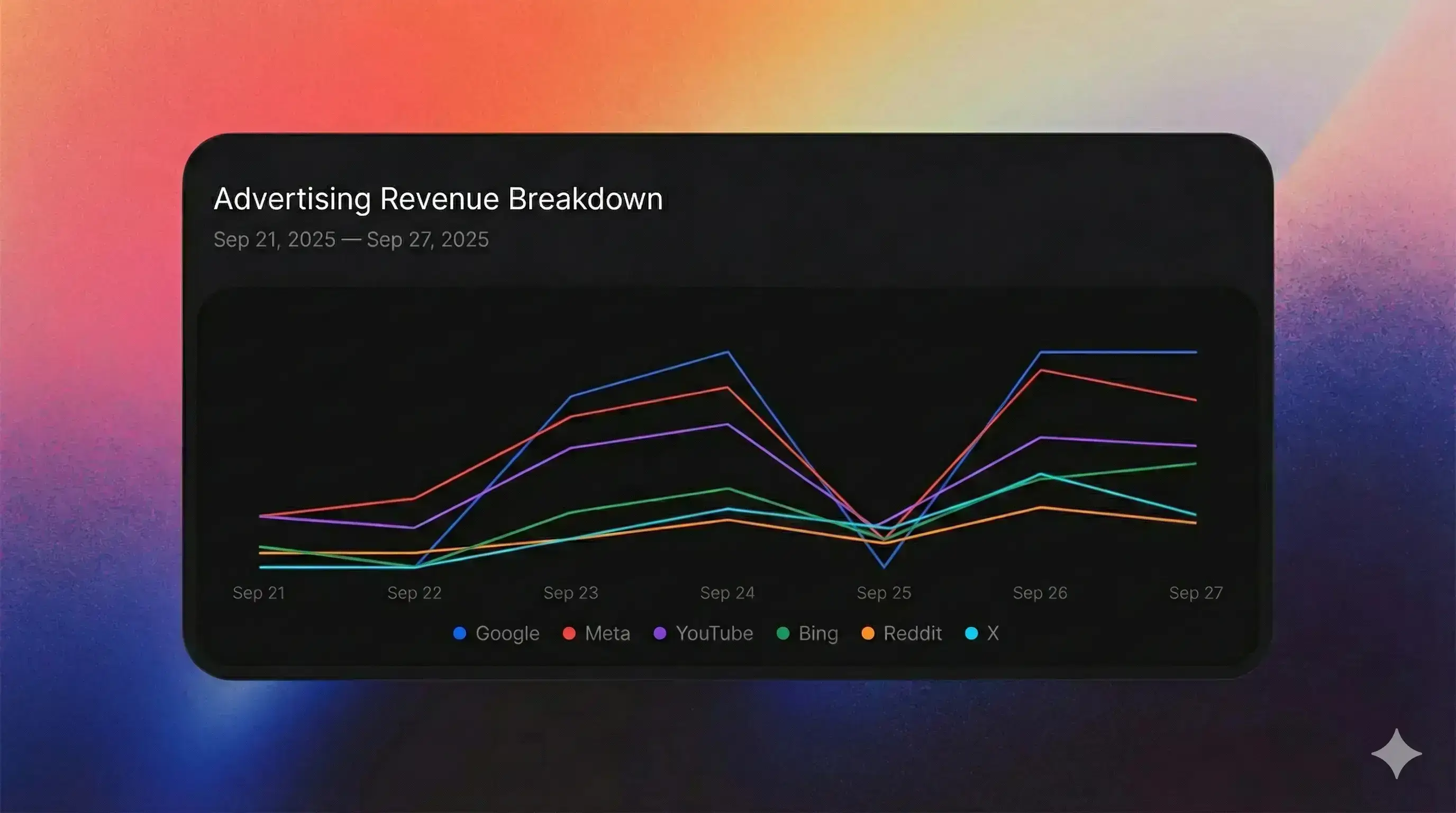
Paid advertising is one of the fastest ways to turn client acquisition into a predictable system, because the core idea is simple: you invest money to generate attention, then convert that attention into booked calls and paid projects. What makes it tricky is not the "running ads" part, but the chain of steps after the click—your targeting, your offer, your landing page, and your follow-up process all need to work together.
A lot of designers fail with ads because they treat them like magic, instead of treating them like a measurable pipeline. If your ad gets clicks but no calls, the problem is usually the page, the message match, or the form friction—not the platform itself. If you get calls but no closes, the issue is often positioning, proof, pricing, or discovery, not "bad leads."
Once you dial this in, ads start behaving like an ATM: you can increase the budget and create more opportunities, as long as delivery quality stays consistent. The main barrier is that ads demand upfront capital and testing, so they usually work best after you already have a portfolio, testimonials, and a clear service package you can confidently sell.
The Power of Referrals

Referrals convert so well because they arrive with trust already attached. When someone reaches out because a friend, colleague, or another business owner recommended you, they're not trying to figure out if you're real—they're trying to figure out if you're available, what it costs, and how the process works.
This changes the sales conversation in a big way. Instead of spending energy proving basic credibility, you spend energy understanding the project scope and helping them pick the right approach, which makes the entire deal smoother and faster. It's also why referred leads often tolerate higher pricing, because they're not comparing ten random quotes from Google—they're choosing someone who already has social proof in their circle.
The hidden skill with referrals is that they don't "just happen"—they're built by doing strong work and making it easy for people to recommend you. That means clean handovers, on-time delivery, clear communication, and a simple moment at the end of the project where the client feels confident introducing you to someone else.
Building Authority via Content Creation
Content creation works because it builds authority before the first conversation. When you share your process, show real outcomes, explain common mistakes, or break down how businesses can improve their websites, people start to associate your name with clarity and competence.
This is not an overnight channel, and that's exactly why it becomes powerful later. The same effort of publishing regularly can create compounding results over time, because older content continues to attract views, build trust, and send warm leads to your inbox months after you posted it.
In 2026, most clients don't want a "perfect pitch"—they want to feel sure you understand their business problems. Content lets you demonstrate that understanding in public, without pressure, and it gives prospects a reason to choose you even if you're not the cheapest option. For a web designer, this can be as simple as showing a before-and-after homepage, explaining what changed, and tying it to business outcomes like more calls, more inquiries, or better lead quality.
Leveraging In-Person Networking
In-person networking feels old-school, but it's still one of the fastest ways to build trust. A real conversation removes a lot of the hesitation people have when they're speaking to a stranger online, especially when you can explain things clearly and answer questions on the spot.
What makes this channel underrated is that many web designers avoid it because it feels uncomfortable or "not scalable." But one good meeting can lead to a paid project quickly, and those relationships often lead to multiple referrals because local business communities talk to each other constantly.
This approach also works well when paired with a simple proof asset, like a quick mockup, a short audit, or a clean portfolio on your laptop. You're not trying to pressure anyone—you're simply making it easy for them to visualize what a better website could look like and what it would do for their business.
Utilizing the Web Agency Club Marketplace
A marketplace built for agencies is valuable because it connects supply and demand in a more direct way. Instead of hunting for business owners one by one, you're placing yourself where agencies already have client work and need reliable delivery partners.
The key advantage here is context: agencies understand timelines, revisions, client feedback loops, and what "professional delivery" actually means. That usually reduces the friction you get with first-time website buyers who don't know what they want yet, and it can create steadier work if you become someone they trust for repeat projects.
For designers who want to scale, this kind of channel can sit nicely alongside outreach and referrals. It won't replace your own brand in the long run, but it can fill the pipeline while you build assets like case studies, testimonials, and a stronger positioning that eventually makes your inbound leads easier to close.
Tier Two: Very Good, But Not Exceptional
Some strategies are solid and reliable, even if they don't have the explosive upside of tier one.
Leveraging Instagram for Lead Discovery
Instagram outreach is a perfect example. Most small businesses have an Instagram account but not a Google Business profile or a website. This means Instagram is an incredible database of potential leads. When you find someone with an Instagram account, you can often see their work, their aesthetic, and whether they're actually a good fit before you even reach out. You can build a credible agency or personal brand page on Instagram, so when you do outreach, people can check you out instantly. This is a huge advantage over generic cold email because you have social proof attached.
Direct Client Acquisition via Cold Calling
Cold calling sits here too. Some people love it, some hate it. Some find success immediately, others struggle because of accent concerns or language barriers. But for people who can do it well, cold calling can generate thousands of dollars in contract value in a single day. It's direct, it's personal, and it lets you close clients quickly once you've refined your pitch.
Tapping into Local Facebook Communities
Facebook groups are surprisingly effective. Not the kind where you post "I'm a web designer, hit me up," but the kind where you find local community groups in suburbs and smaller areas. Business owners post in these groups all the time—plumbers mentioning they're looking for new clients, florists sharing their services, contractors looking for connections. Many have no website and no online presence beyond Facebook. They're absolutely ready to hear from someone offering to build them a proper online presence.
Tier Three: Good, But Not Best
Leveraging Google Maps for Business Discovery
Google Maps and directory searches work, but they're noisy. Yes, you can find countless businesses without websites or with terrible ones. Google Maps is probably the single biggest database of local businesses on the planet. The problem is that everyone else knows this too. Any business on Google Maps that's missing a website is getting outreached to constantly. Your email or message is competing with ten others just like it.
Building a Long-Term Presence on Fiverr
Fiverr is legitimate if you commit to it, but that's the catch. You can make real money on Fiverr, but you have to build your account over time, climb the levels, gather testimonials, and establish credibility. For beginners, the entry barrier is frustrating because your first month or two on Fiverr will feel like shouting into the void. If you already have testimonials and a strong portfolio from other sources, Fiverr can work. But as a starting point, there are better options.
Prospecting via Online Directories
Online directories are similar to Google Maps but slightly different. They're like digital yellow pages. Many contractors and service providers list themselves on directories but have zero other online presence. Finding them here works, and you can easily pull their contact info and do outreach. It's a solid strategy, just not as powerful as some others.
Tier Four: The Real Problem Strategies
Cold email deserves honesty. It can work if you're doing it at massive scale with properly warmed domains and sophisticated campaigns. But for someone trying to sign their first few clients? Cold email is honestly a waste of time and energy. The conversion rates are atrocious, the setup is technical and requires testing, and for the amount of time you'll spend perfecting email sequences, you could land multiple clients using methods that actually work.
The Hidden Strategy Worth Your Attention
One approach that deserves special mention is what could be called the ad hijack method. You find businesses running paid ads on Facebook, Google, or Instagram. These are companies already spending money on marketing. But here's the thing: many of them are sending that ad traffic to either no website at all, a badly designed website, or just a landing page that doesn't convert. They're pouring money into ads and losing it in a broken funnel.
This is where you step in. You approach them with a simple pitch: "I noticed you're running ads but your landing page or website isn't set up to convert that traffic. We can fix that." You're not selling them a website from scratch. You're positioning yourself as someone who can save them money by fixing the leaks in their existing funnel. It's a strong pitch because it's based on something they're actually already doing and spending money on.
How to Actually Use This Information
The biggest mistake people make after learning about these different strategies is trying all of them. They read this, think "Yeah, I'll do Instagram outreach and cold email and paid ads and directory searches," and then they do a weak version of each instead of becoming excellent at one or two. For more on effective marketing strategies, check our guide for small businesses.
Here's a better approach: Pick two strategies from tier one or tier two. Master those. Get good enough that they feel natural and you're consistently getting results. Then, as your agency grows and you have systems in place and case studies to show, layer in more strategies.
If you're just starting out, in-person networking and Instagram outreach are your friends. They require no upfront capital, they let you build a personal brand, and they actually work. As you get your first clients, gather testimonials, and build some proof of concept, then you can think about paid ads.
Once you're signing clients consistently and you have the systems and people in place to deliver great work, referral strategies and building a personal brand really accelerate. By the time you're at that stage, inbound leads are coming to you naturally from past clients and from people who've seen your content.
Why This Matters
The uncomfortable truth is that most web designers fail not because they can't build good websites. They fail because they never figure out consistent client acquisition. They might land one or two clients, deliver great work, and then be stuck explaining their value all over again to the next prospect.
The agencies that win are the ones that figure out which channels work for them, commit to those channels, and then build everything else around that foundation. They say no to shiny objects. They don't jump from strategy to strategy based on what they saw in a YouTube video.
Your effort matters, but direction matters more. Pick the right channel, get good at it, and then scale it. That's how you go from wondering why clients aren't coming in to consistently signing clients every single month.

Related Articles
Discover more insights about web development and digital marketing